Most transport and fleet businesses do not fail because their people are slow. They lose time because job information is scattered across spreadsheets, whiteboards, messaging apps and a separate accounting system. FleetPro replaces that patchwork with a single transport management platform for Australian operators, where jobs, drivers, vehicles, trailers, compliance records, customer communication and invoicing all reference the same data.
Local and interstate transport operations
Metro distribution work and long-haul interstate movements run in the same transport management software, each with their own legs, rates, stop sequences and documentation. Dispatchers see the full day across both, so a short local run is never lost behind a linehaul job.
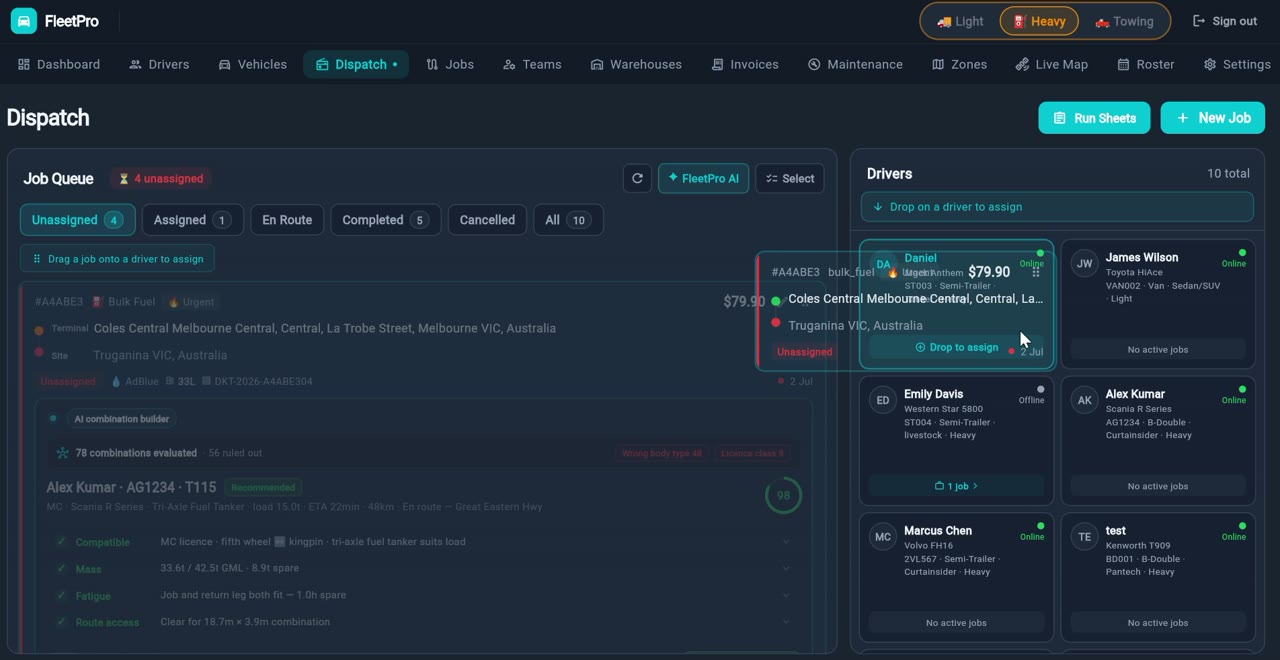
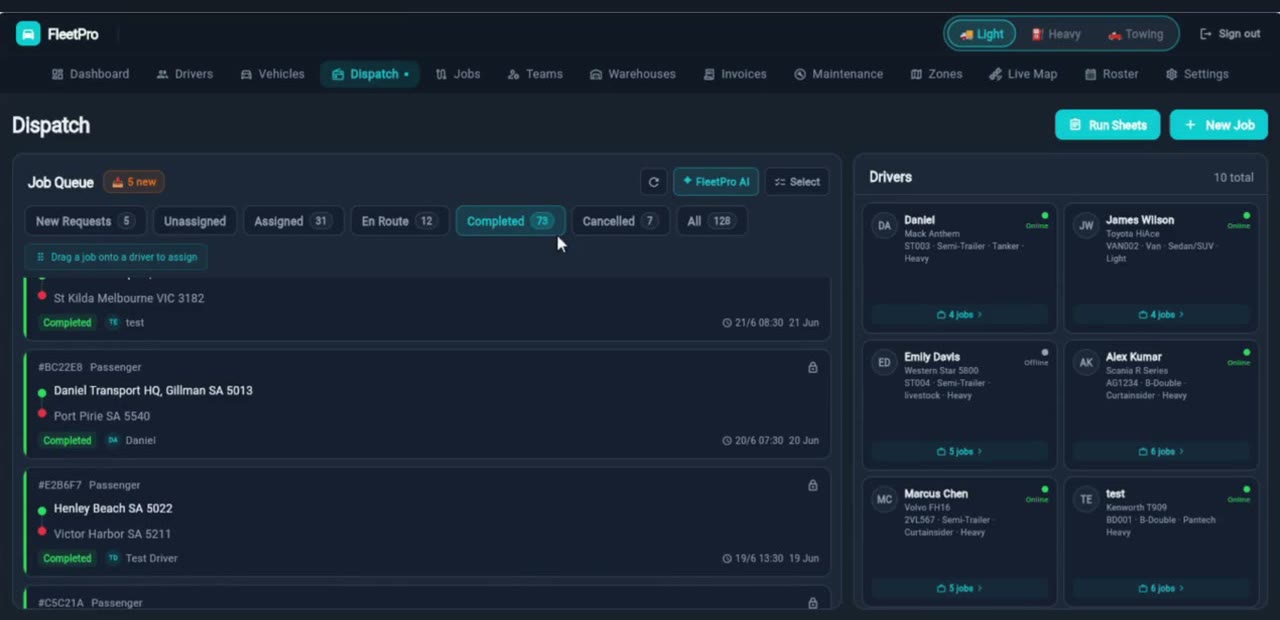
Job creation, scheduling and dispatch
Jobs are created from customer requests, recurring runs or standing contracts, scheduled against the day's capacity, and dispatched from one board. Every status change — allocated, on the way, on site, completed — is recorded against the job rather than living in a phone call.
AI-assisted vehicle and driver recommendations
FleetPro's AI dispatch software evaluates available drivers and equipment against the requirements of each job and recommends workable combinations. Your dispatcher stays in control and confirms or overrides every allocation.
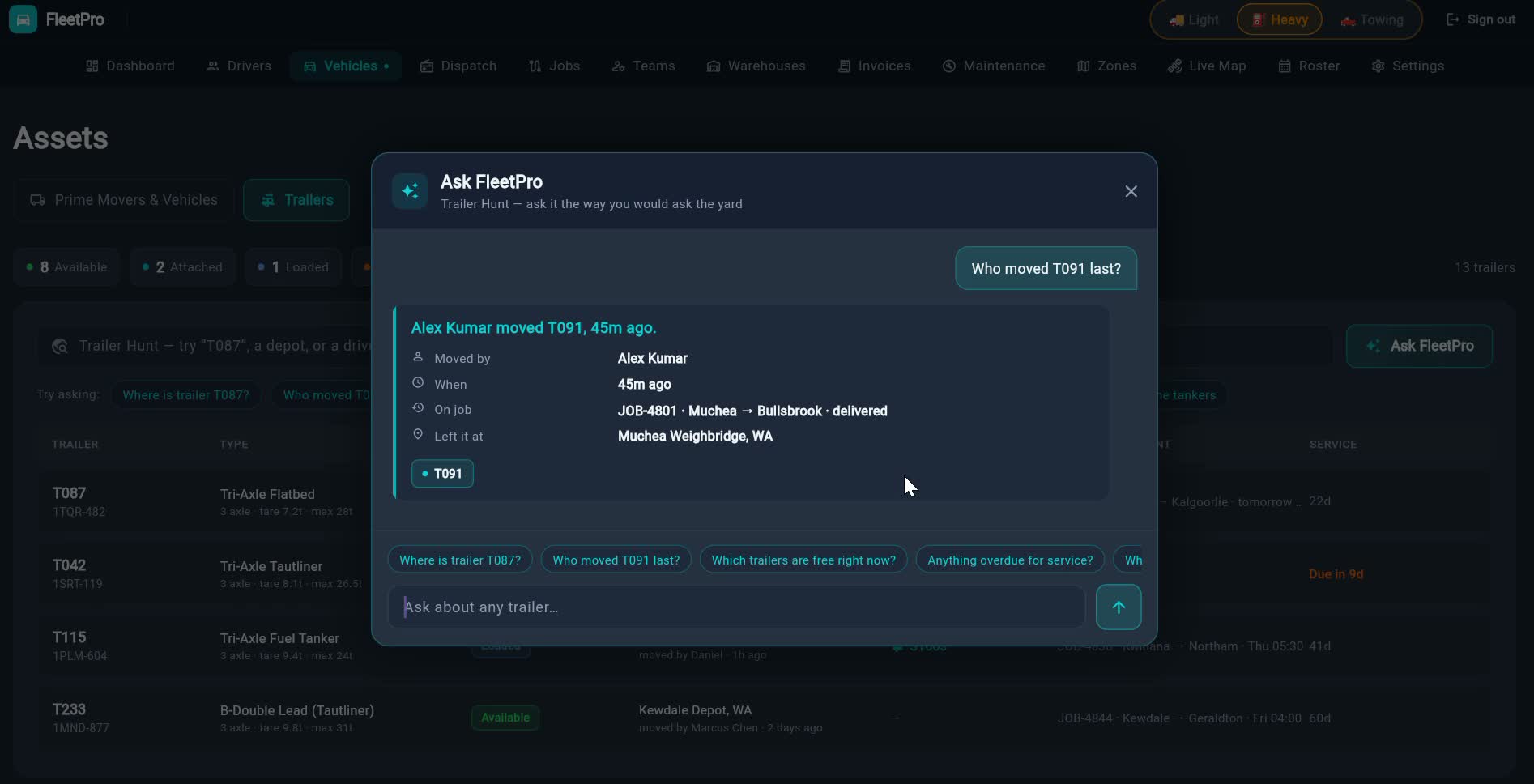
Prime mover, trailer and combination management
Prime movers, rigids, trailers and combinations are managed as assets with their own body type, class, mass suitability and service status, so allocation reflects what the equipment can legally and practically do.
Driver mobile applications
Drivers work from a mobile app: allocated jobs, stop details, progress updates and document capture, all from the cab. Driver management software and dispatch stay in sync without radio traffic or paper run sheets.
Live job and vehicle visibility
The office sees where each job and vehicle stands in real time. Delays surface on the board rather than arriving as a customer complaint.
Multi-stop deliveries and route planning
Jobs can carry multiple pickups and drops with a sequenced stop list, supporting last-mile and distribution work where a single run touches many sites.
Customer notifications and tracking portals
Automated email and SMS updates keep customers informed, and a customer portal gives them their own view of job status and history — which takes the 'where is my delivery?' calls off your dispatch team.
Proof of delivery and document capture
Photos, signatures, notes and delivery dockets are captured on the driver app and attached to the job, so the evidence is on file before the invoice is raised.
Fatigue, compliance and maintenance integrations
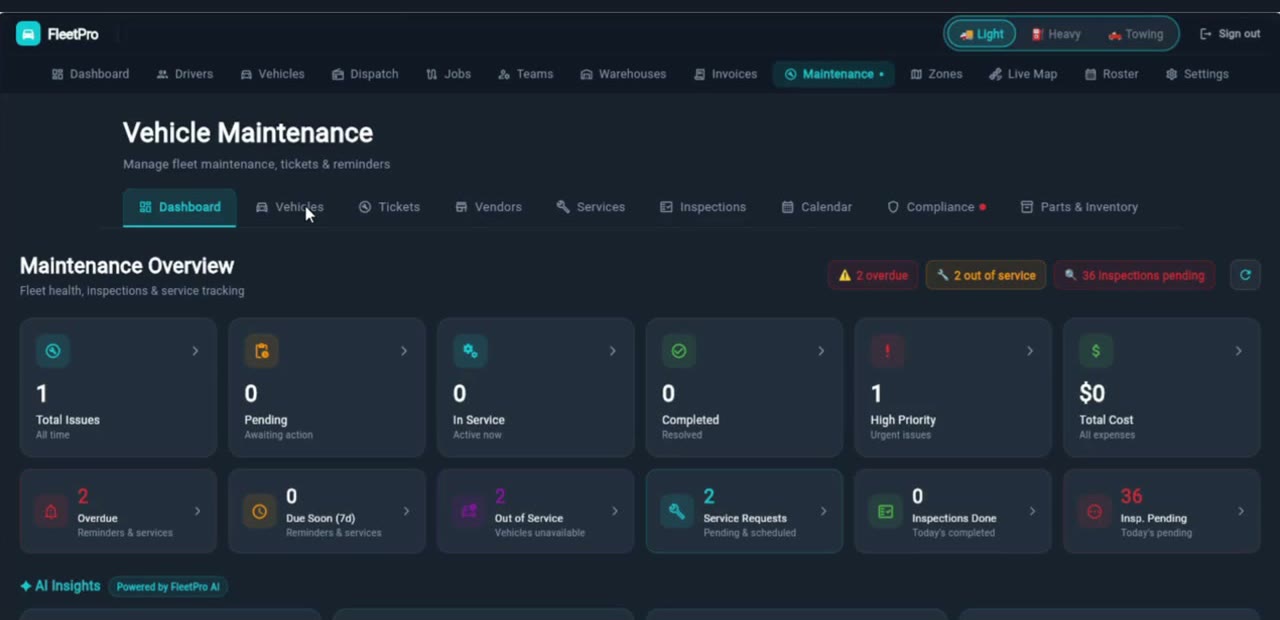
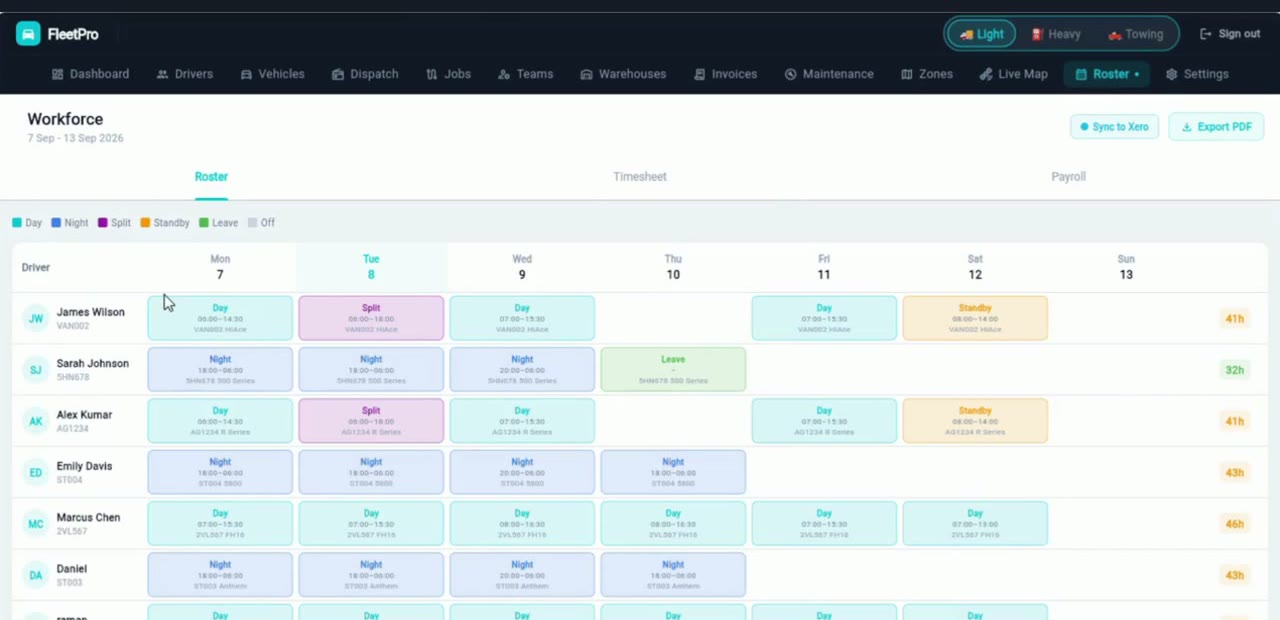
Licences, accreditations, inspections and expiry dates sit in registers rather than a filing cabinet, and fatigue and service status can be factored into allocation and flagged before a vehicle goes out.
Rules-based invoicing and Xero integration
Completed jobs convert into invoices using your rate rules, with accounting integrations such as Xero, so billing does not depend on someone re-keying yesterday's run sheets.
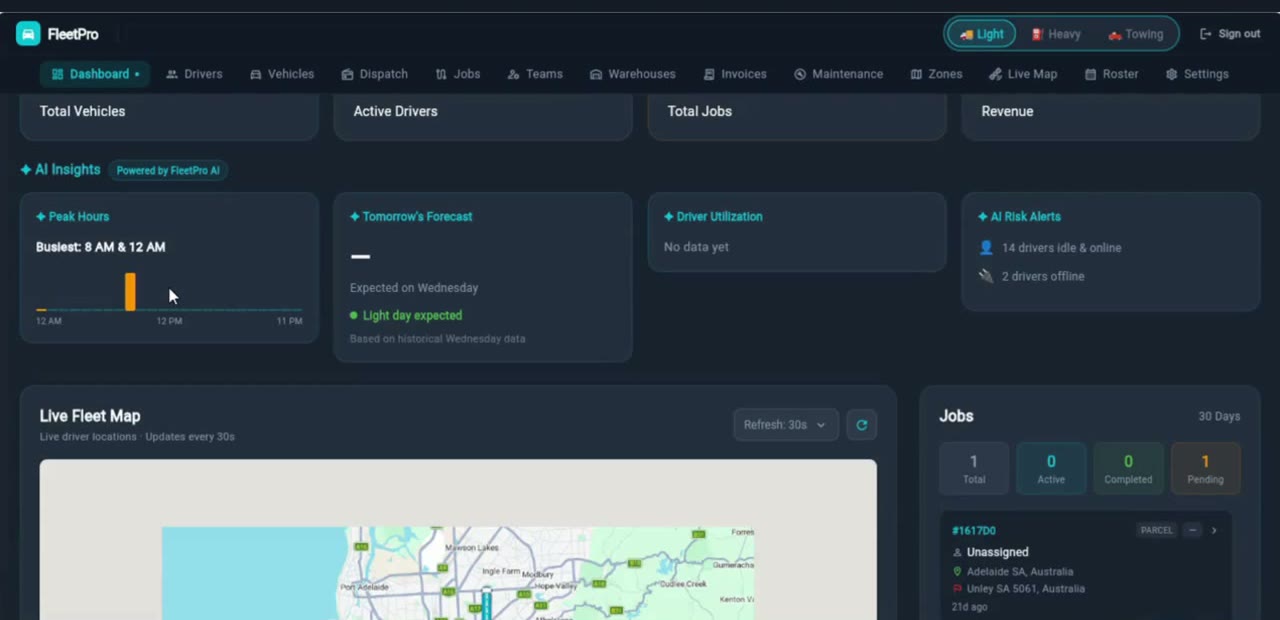
Multi-depot operations and management reporting
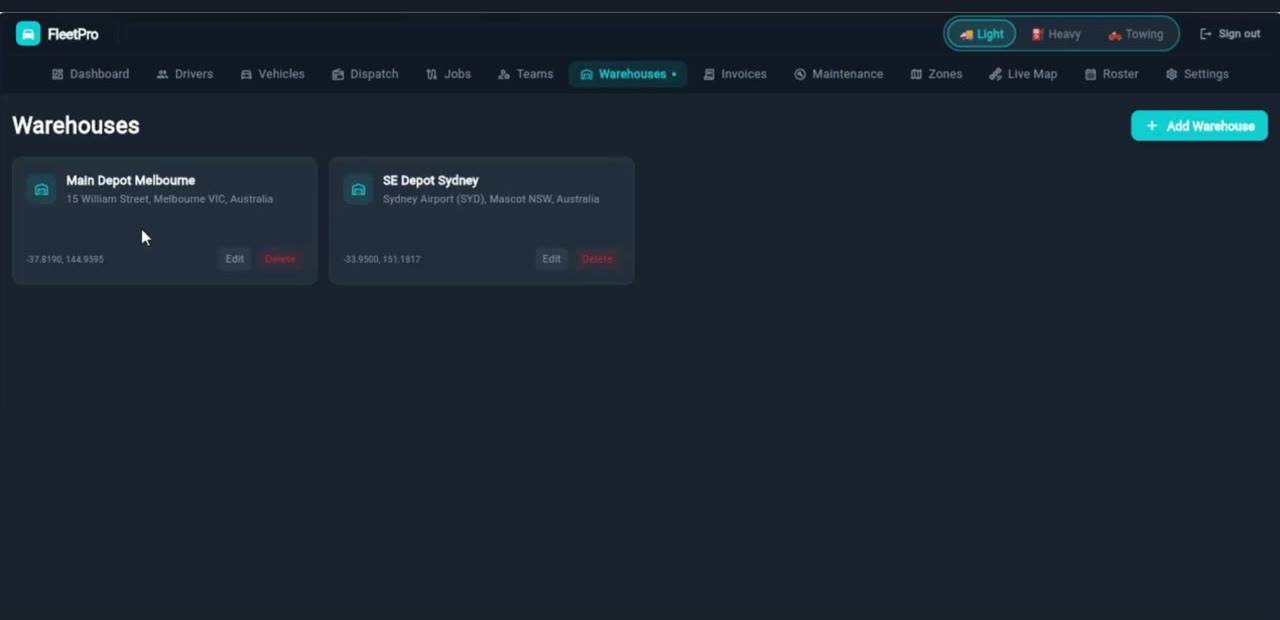
Operators running several depots or branches manage them from one account, with reporting on completed jobs, utilisation, delays and bottlenecks per depot or across the whole fleet.